
The Walking Dead: Aftermath
Ares Interactive, Inc.Action
4.71.60K Reviews
- Version
- 1.3.1
- Installs
- 1.00M
- Age Rating
- Teen
Screenshots

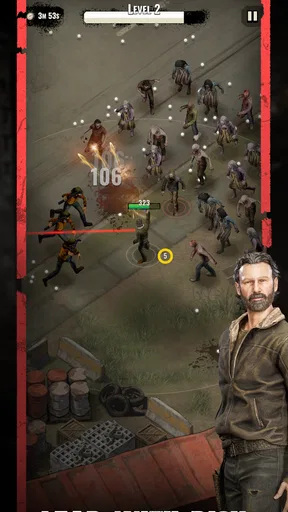
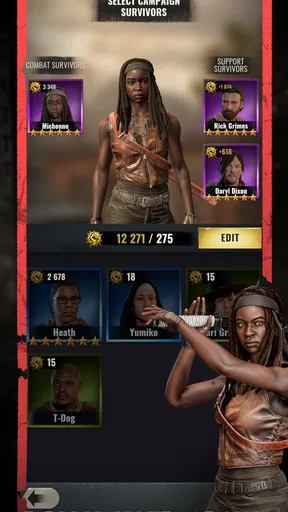
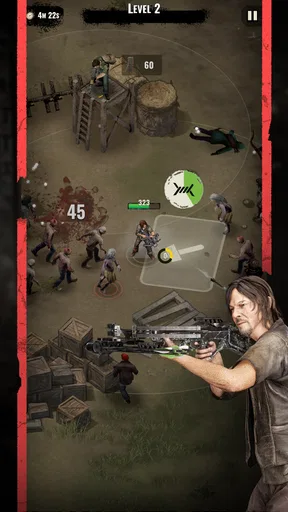
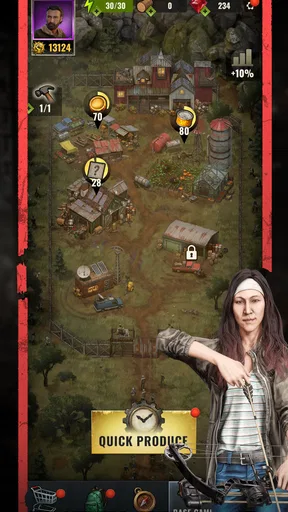
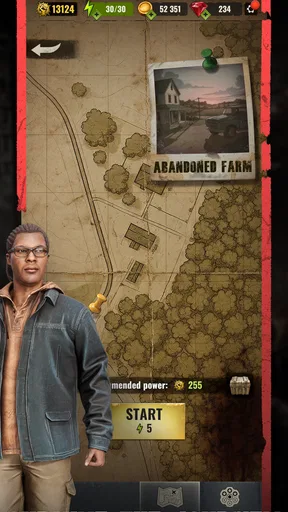
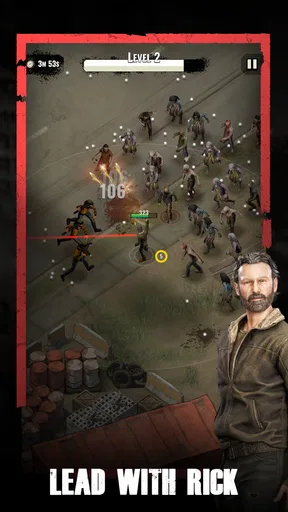
Our Review of The Walking Dead: Aftermath
 Analysis by Appyee
I spent time with The Walking Dead: Aftermath as an action game built around the pressure of surviving walker swarms and directing recognizable survivors from The Walking Dead universe. My first impression was that it works best when I treat it as a focused mobile session rather than a game to leave running in the background. The tension comes from making quick choices, keeping track of danger, and deciding when to push forward instead of assuming that every encounter can be solved by attacking everything in sight.
That makes it an interesting choice for a shared household device. One person can play a short session and hand the phone or tablet to someone else, but the experience still benefits from a clear boundary between players. I would not approach it like a casual puzzle game that anyone can open without context. It is more demanding, carries a Teen content rating, and asks the player to pay attention to what is happening on screen. For the right household, that combination can make it a fun conversation starter; for a family looking for a gentle, universally suitable game, it is a poor match.
How it feels in everyday shared use
In my experience, the most practical way to use this game around other people is to agree on when a session begins and ends. If I am playing while someone else is watching, the action is easy to follow because the central idea is immediately understandable: walkers create pressure, survivors need direction, and mistakes can turn a manageable situation into a dangerous one. A younger or less experienced player can watch without needing to understand every decision, then try a turn when the situation is calm.
The game is less convenient when several people expect to play simultaneously on one device. Passing a phone back and forth during a tense encounter can interrupt concentration, and a player who takes over without knowing the current situation may waste a useful opportunity. I found that a simple handoff works better when the outgoing player explains the immediate objective, the nearby danger, and any decision they were deliberately saving for the next move.
That small routine matters because the appeal is not only the fighting. The strongest moments come from managing pressure. If I rush into every group of walkers, I lose the chance to read the area and choose a safer route. If I hesitate forever, the game can feel slower than it needs to be. A second player can offer useful advice, but too many voices often make the decision less clear.
For a household with a shared tablet, I would place the game in a planned entertainment slot rather than leave it available as an always-on distraction. The larger screen makes the action easier to watch, while the shared nature of the device encourages a natural break between sessions. On a personal phone, it feels more private and immediate, which suits players who want to concentrate without an audience.
Why the shared-device boundary matters
I would keep each player’s progress and decisions clearly separated in the household routine, even if the game is being played on one device. The important point is not to assume that another person can continue exactly where I stopped without an explanation. In a survival game, context has value: the current condition of the survivors, the position of walkers, and the intended route all affect what a sensible next move looks like.
This is also where the game differs from a simple arcade alternative. In a traditional score-chasing action game, another player can often start fresh and immediately understand the goal. Here, the The Walking Dead setting and survivor-led structure make the session feel more like a continuing situation. That is enjoyable for someone who likes continuity, but it creates friction for a household where people want instant, consequence-free turns.
My practical tip is to let one person handle a complete encounter or clearly defined segment before handing over the device. That preserves the rhythm of the action and avoids the awkward middle-of-a-fight switch that can make the next player feel blamed for a problem they did not create. It also gives younger players a chance to observe the decision-making before taking control.
Setup, account boundaries, and the first sessions
The game is free to start, which lowers the barrier for trying it on an Android device. It comes from Ares Interactive, Inc., and supports Android versions from 7.1 onward. I would still think about the device itself before installing it on a shared phone: available storage, battery condition, screen size, and whether the device is comfortable to hold during action all affect the experience more than the basic installation step.
Because the game includes in-app purchases ranging from small items to much larger purchases, I would establish a household rule before anyone plays. A free download does not automatically mean that every part of the experience is financially neutral. If several people use the same device, the safest everyday habit is to make sure purchases require the account holder’s deliberate approval and that children know they must ask first. I would treat this as a conversation about the device and its account rather than assume the game itself will solve the boundary.
This is especially important when a child watches an adult play and then wants to imitate the same choices. The excitement of a walker swarm can make a purchase feel like a quick way to improve a difficult moment. I would explain that progress decisions and spending decisions are separate: being stuck is a reason to change tactics, not automatically a reason to buy something.
The current version is 1.3.0, and I would begin with a short personal session before inviting other household members to join the routine. That first session lets me learn the controls, notice how quickly danger develops, and decide whether the game’s pace suits the person who will be playing. It is much easier to guide someone else after I have experienced the opening pressure myself.
A useful onboarding habit
Rather than handing the device to a new player during a chaotic scene, I would demonstrate three things in order: how to read the immediate threat, how to move without panicking, and how to recognize when attacking is not the best first response. This is a more useful introduction than simply saying that the game is about fighting walkers. The real lesson is that survival depends on choosing the moment and direction of action.
That approach also reveals whether the game is suitable for the player. Someone who enjoys tense decisions will probably understand the appeal quickly. Someone who wants relaxed, predictable action may find the pressure irritating, especially if a mistake feels costly. I would not force a reluctant player through a long explanation; a brief trial is enough to show whether the tone and pace fit.
Players should also decide whether the game belongs on a personal account or a shared household device. I would avoid casually mixing different people’s progress if the game’s continuing state matters to the enjoyment. Even without turning the setup into a complicated project, a clear owner for the save and a clear person responsible for purchases prevent most avoidable arguments.
Coordination turns survival into the main challenge
The most interesting coordination opportunity is not competitive multiplayer between family members. It is the discussion that happens around a single player’s decisions. One person can control the action while another watches for threats, remembers the intended route, or points out that rushing forward may create more trouble. That makes the game surprisingly suitable for a parent and older teenager, siblings, or friends sharing a screen, provided the player at the controls remains the final decision-maker.
I found that back-seat advice is useful only when it is specific. “Be careful” adds little. “There is a safer-looking opening on the side” or “wait before committing to that group” gives the player something actionable. The game’s walker-swarm premise naturally creates these moments because the screen can shift from manageable to crowded quickly. A good observer helps reduce tunnel vision; a noisy observer makes it worse.
For a household session, I would assign different roles without pretending they are official game modes. The player handles movement and immediate reactions. The observer watches the broader situation and asks questions. After the encounter, both can discuss what worked. This turns a solitary action game into a small coordination exercise without inventing a multiplayer feature that may not be part of the experience.
There is a trade-off here. Some players want complete control and may dislike commentary, even when it is well intentioned. Others enjoy having someone nearby because the tension becomes entertaining for both people. I would ask before advising, especially with teenagers who may be testing the game independently. The best coordination is invited, not imposed.
When a different action game is better
Compared with a conventional endless shooter, this game is a better fit for someone who wants a recognizable survival world and decisions involving survivors rather than only reflex-based target practice. The Walking Dead identity gives the action an emotional frame, and the focus on leading survivors makes the player feel responsible for more than a personal score.
On the other hand, an arcade-style alternative is better for quick competitive turns, instant restarts, or a household where everyone wants to play for only a minute or two. A strategy game may also suit a player who prefers planning from a distance and dislikes direct action pressure. I would choose this title for someone who wants the tension of being inside a walker crisis, not for someone seeking the cleanest, most relaxed action loop.
Another trade-off is the license itself. Fans of The Walking Dead may enjoy seeing the setting shape the mood, while players unfamiliar with the universe may not feel the same attachment to its survivors. The game can still be understood as an action experience, but the setting is part of its reason to exist. If that world means nothing to the player, a different action game may offer a stronger connection.
Age, trust, and choosing the right player
The Teen rating should be taken seriously in a shared household. A parent may be comfortable with the game for an older teenager but not for a younger child, particularly if the child is sensitive to frightening scenes, survival themes, or the general atmosphere of a walker outbreak. I would watch the first session rather than rely on the label alone, because children respond differently to the same fictional danger.
Trust also includes spending behavior. A responsible player needs to understand that free access and optional purchases can coexist. I would make the rule simple: nobody buys anything without the account holder’s permission. That applies equally to adults and children when the device or store account is shared. Clear expectations are more useful than assuming everyone will interpret the purchase system in the same way.
For a teenager who enjoys The Walking Dead, this could be a good fit for supervised shared play or personal sessions within agreed limits. For a younger child who mainly wants to control a character and defeat enemies, I would look for a game with a lighter tone and fewer concerns around age suitability. The fact that the game is popular does not make it appropriate for every member of a household.
The audience response is strong, with a 4.7 average from around thirty-nine thousand ratings. That suggests many players find the core experience compelling, but it does not remove the need to judge the tone, purchase structure, and action intensity for a particular person. Popularity can tell me that the game has broad appeal; it cannot decide whether my own household will enjoy sharing it.
What I would explain before handing it over
I would tell a new player that the goal is not simply to attack as quickly as possible. I would explain that the survivors and the surrounding danger deserve attention, and that a calm decision can be more valuable than a flashy one. I would also mention that the game is free to download but includes optional purchases, so nobody should tap a purchase button casually.
I would set expectations about the mood as well. This is an action game in a bleak walker-survival setting, not a harmless cartoon activity. A player who becomes uncomfortable should be able to stop without being teased. That sounds obvious, but it matters when a group is watching and one person is trying to prove they are not frightened.
Finally, I would avoid presenting the game as a shared family game in the broadest sense. It is better described as a Teen-rated action game that can work in a household with communication and sensible boundaries. That distinction keeps the recommendation honest.
My household verdict after living with it
The Walking Dead: Aftermath is most successful when I approach it as a tense, survivor-focused action experience rather than a disposable time-killer. The walker swarms create immediate pressure, but the more lasting appeal comes from deciding how to move through danger and how to protect the flow of a continuing situation. That makes it enjoyable for fans of the universe and for action players who like a little more context around each encounter.
For shared use, I recommend it with conditions. Keep players’ turns organized, explain the situation during handoffs, and agree on purchase boundaries before installation. Let the Teen rating guide who gets access, and pay attention to how each person reacts to the atmosphere. These are not obstacles to enjoyment; they are what make the game easier to share without confusion.
The game has reached over one million installs, and its free entry makes trying it straightforward. Still, I would not recommend it solely because it is free or widely played. The in-app purchase range means household account discipline matters, and the action-focused design will not suit players looking for a peaceful or instantly understandable experience.
I would recommend it to an older teenager or adult who likes The Walking Dead setting, enjoys making decisions under pressure, and is comfortable with a game that asks for attention. I would skip it for a young child, for a household that needs a universally gentle title, or for anyone who wants short competitive turns with no continuing context. In those cases, a lighter action game or a simpler arcade alternative would be a better choice.
My final view is positive but measured: this is a strong shared-screen conversation game when one person plays and another helps read the situation, yet it needs clear boundaries around age, account use, and spending. If your household can provide those boundaries, the tension becomes part of the fun instead of a source of arguments. If not, I would choose something less demanding and less sensitive to who is holding the device.
Verdict
Strengths of The Walking Dead: Aftermath
- Atmospheric visuals and sound design create a convincing zombie-survival mood.
- Simple controls make scavenging and combat easy to learn on mobile.
- Varied objectives keep missions from feeling completely repetitive.
- Exploration rewards players with supplies, upgrades, and hidden collectibles.
- Playable offline in some modes, making it convenient for travel.
Limitations of The Walking Dead: Aftermath
- Frequent combat can become repetitive after extended play sessions.
- Some missions feel restrictive because of invisible progression barriers.
- Resource management may feel tight, especially during difficult encounters.
- Loading times can be noticeable on older phones and tablets.
- The storyline is less engaging if you have not followed the Walking Dead universe.
Other Releases by Ares Interactive, Inc.
View All
Baseball Hits 26
Sports4.4
Similar Picks in This Category
View All
Temple Run 2: Endless Escape
Imangi Studios4.1

PUBG MOBILE
Level Infinite4.3

Free Fire: 9th Anniversary
GARENA INTERNATIONAL I4.4

Talking Tom: Hero Dash Run
Outfit7 Limited4.3

slither.io
Lowtech Studios3.9

Sniper 3D:Gun Shooting Games
Wildlife Studios4.6
Frequently Asked Questions
What is The Walking Dead: Aftermath?
The Walking Dead: Aftermath is a mobile survival game set in the universe of The Walking Dead. It focuses on surviving a zombie outbreak, exploring dangerous locations, collecting useful supplies, and dealing with constant threats. The experience combines action, exploration, and resource management, making it suitable for players who enjoy tense post-apocalyptic adventures rather than simple, fast-paced arcade gameplay.
How does the gameplay work in The Walking Dead: Aftermath?
Gameplay generally revolves around moving through infected areas, searching buildings and environments for resources, completing objectives, and avoiding or confronting walkers. Ammunition, health items, and other supplies can be limited, so careless decisions may create problems later. Players should explore carefully, manage their inventory, and decide when fighting is worthwhile because attracting additional enemies can quickly make a situation more dangerous.
Can The Walking Dead: Aftermath be played offline?
Offline availability may depend on the specific version, platform, and features being used. Some parts of the game may work without a continuous connection, but online services, advertisements, updates, cloud functions, or certain progression systems can require internet access. Before downloading, it is best to check the current store description and test the game with a stable connection during the first launch.
Is The Walking Dead: Aftermath free to download and does it include purchases?
The game may be offered as a free download, although availability and pricing can vary between Android and iOS, as well as by region. Free versions can include advertising, optional in-app purchases, or systems designed to encourage additional spending. Parents and players who prefer a completely uninterrupted experience should review the store listing and device purchase settings before starting.
What devices are compatible with The Walking Dead: Aftermath?
Compatibility depends on the operating system version, device hardware, available storage, and the particular release distributed in your region. Because games with detailed environments can require more memory and processing power, older phones or tablets may experience longer loading times, reduced performance, or installation problems. Check the official Google Play or App Store listing for the latest requirements before downloading.
Play our best games!


